Wednesday, 2 May 2007

Gunung Trusmadi 2,642m

Nepenthes lowii
Date: 02 May 2007 - 06 May 2007
Location: Gunung Trusmadi, Sabah
From: TVRC, Tambunan, Sabah
Altitude: 2,642m ASL
Difficulty: 6.7/10
Hike duration: 2D1N
A.K.A.: G2 of Malaysia
Camera: Canon EOS 350D
Lens: Sigma 18-200mm F3.5-6.3 DC
Filter: Hoya CPL
Post editing: PS CS2
Organizer: Dan
Members: Lucy, KL Tan, Doreen, Kah Fai, Ong Lee and CS Law
Guide: 1 local guide from TVRC
My reason to go there: An important mountain to conquer in order to complete G12. Also was really interested to see the endemic Nepenthes x trusmadiensis and Nepenthes lowii

Other places visited: Tambunan (坦布南), Keningau (根地咬), Tenom (丹南) + Kota Kinabalu (亚庀) of Sabah
I have selected some pictures from a trip to Gunung Trusmadi for this album.
Gunung Trusmadi (2,642m/8,665ft) is the second highest mountain in Malaysia. Located 70km Southwest of Kota Kinabalu, Sabah and rarely visited.

Trekking to the summit of Trusmadi takes only 1 day, passing through semi-cultivated land and rural villages and a night in the wilderness. Vegetation changes on the ascent from the lowland Dipterocarp Rainforest to Hill Forest through to Montane Oak Forest and up on to stunted Bonsais on the summit. On a clear day, Mount Kinabalu can be seen from Trusmadi.... and I was there on a clear day, super!

Other places visited were Keningau and Tenom...

SLIDESHOW


Nepenthes x trusmadiensis
 
Nepenthes x trusmadiensis

Nepenthes edwardsiana
 

Sunday, 29 April 2007

石佛 - Stone Buddha

Date: 29 Apr 2007
Subject: a volcano stone statue of Buddha (From Java, Indonesia)
Camera: Canon EOS 350D
Lens: Tamron SP AF90mm F/2.8 (Di) Macro 1:1
Filter: none
Others: simple DIY light tent
Post editing: PS CS


Something new to me again, something I wanted to try a long time ago.... may be something new to you too, see them with an open mind, a pretty volcanic stone statue, fine art and not anything related to religion .... critics welcome.


Sunday, 22 April 2007

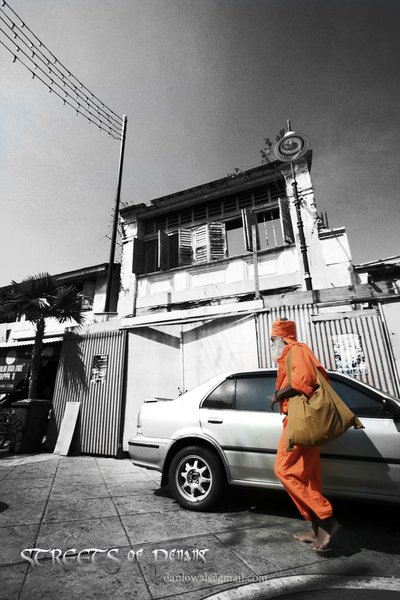
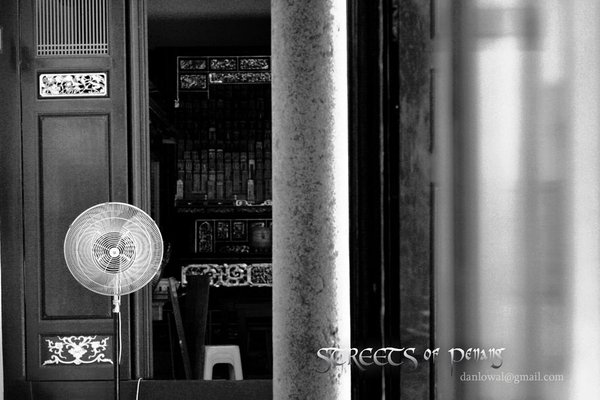
Street of Penang


Date: Apr 2007
Location: Penang Island
Camera: Canon EOS 350D
Lens: Sigma 18-200mm F3.5-6.3 DC & Canon EF-S 10-22mm f/3.5-4.5 USM 
Filter: Hoya CPL
Post editing: PS CS2 


A Saturday downtown stroll with some friends …. PC Ooi, Kevin and CH.
Yeah did some post editing this time …. Hope they are good ….


Saturday, 24 March 2007

Pulau Redang

Date: 24 Mar 07 - 27 Mar 2007 [4D/3N]
Location: Redang Island, Terengganu, Malaysia
Transport: Car
No. of dives: 6-7

Accessibility to dive sites: 8.5
Marine Animal Density: 7.3
Dive site terrain Quality: 8.5
Marine Animal Diversity: 7.6
Visibility: 6.0
Overall Score: 7.6

Entry: Boat
Difficulty: OW-AOW
Dive Sites: Fringing reefs/Sandy Bottoms/Pinnacles

Underwater Camera: Canon Powershot A80
Underwater casing: Canon Waterproof Case WP-DC900 for Powershot A80 by Canon
Underwater Strobe: NIL
Land Camera: Canon EOS 350D
Land Lens: Sigma 18-200mm F3.5-6.3 DC
Land Filter: Hoya CPL
Post editing: PS CS2
Oraganizer: Dan
Members: Winnie, Rockson, Lucy, KL Tan, Choon Wai, Doreen, Lilian, Sam, Alvin Low
My reason to go there: Many friends were interested in getting their Open water scuba diving certification, that’s why I did this trip, at the same time I can do a few dives.


I have been to Redang many times, for almost every year for the pass 13 years or so, sometimes twice in a year... On the surface everything look pretty much the same except that there are more concrete resorts now, like Laguna... it used to be all wooden resorts on the island. The water remains crystal clear and the beach clean ..... however what is ugly lies beneath the surface, there were evidence of littering into the ocean, plastic bottles, plastic bags, paper, ropes, empty sun block bottles, etc etc are found around the house reef .. .away from the sight for ordinary tourist, but not from scuba divers like us .... also there were evidence of corals dying, as I saw patches of dead corals almost in every other dive I did....
Never the less Redang remains pristine in its own right, there are still hidden paradises to be found below the surface, and teaming with marine life ... I wish it would remain like that forever...
We need to conserve, be eco aware.. safeguard and protect what is left of places like these…


SLIDESHOW


Saturday, 3 March 2007

Gunung Yong Yap 2,168m

Date: 03 Mar 2007 - 04 Mar 2007
Location: Gunung Yong Yap, Perak/Kelantan
From: Kuala Mu, Lasah, Sungai Siput, Perak
Altitude: 2,168m ASL
Difficulty: 7.2/10

Hike duration: 2D1N
A.K.A.: G6 of Semenanjung Malaysia
A.K.A.: G11 of Malaysia
Camera: Canon Powershot A80
Lens: add-on wide angle adapter
Filter: NIL
Post editing: PS CS1
Organizer: Micheal Phoon
Members: Dan, Lucy, KL Tan, Doreen and FYC group from KL
Guide: Micheal Phoon
My reason to go there: My first “G”, joint this trip to see if I would like hiking “G” mountains. And I love it!

Location: Sg. Siput(Perak) -> Lasah -> Kuala Mu -> Pondok luar -> Pondok dalam -> Summit(Perak/Kelantan) at 2,168m ASL
Thoughts: It was a good trip meeting new friends, camping at the summit of Yong Yap and blessed with clear morning sky. With less than RM100 we had some clean healthy fun away from our daily lives, 2.5hrs of bumpy 4WD journey, 8 hours of hiking, great food, camp and most of all I did Yong Yap, now I know what is G6 like. …… Doing this trial in 2 days is absolutely possible, however if it is done in 3 days then it would be even better coz we’ll get to camp at Pondok Dalam along side with a nice flowing stream. Parallel with our group was another group from PJ which also did the same trial same time, we rubbed shoulders and exchanged greetings several times along the trail and finally met up at the summit, fascinatingly some of them are multiply users too ….

Mount Yong Yap in Sungai Siput, Perak, is one of the higher mountains in the peninsula but can be climbed in three days.
To get to the base of the trek at Kuala Mu, you will need to hire 4WD to the Orang Asli village, which is 2.5hrs away. You may also need to hire guides from this village.
The trek up this mountain is very steep at many parts. Surprisingly, elephants are known to visit the peak quite regularly.
The peak is rather big and offers magnificent views of Mount Korbu, Mount Yong Belar as well as Mount Brinchang.


SLIDESHOW


Sunday, 21 January 2007

Similan Islands


Date: 21 Jan 07 - 27 Jan 07 [7D/6N]
Location: Similan Islands, Richelieu Rock and Koh Bon, Thailand [Dive]
Location: Khao Lak(Phang Nga), Ao-Nang(Krabi), Trang and Satun, Thailand [Stop over]
No. of dives: 15

Dive mode: Live onboard 4D/4N
Dive Operator: South Siam
Dive type: Fringing Reefs, submerged seamount
Depth: 15 - >30m
Visibility: 15-20m[Similan Islands], 15m[Koh Bon], 10m[Richelieu Rock]
Currents: Can be strong
Surface Conditions: Calm
Water Temperature: 26 - 29°C
Experience Level: Beginner - Advanced
Transport: Car (Penang-Khao Lak 10 hours)
Camera: Canon Powershot A80
Underwater casing: Canon Waterproof Case WP-DC900 for Powershot A80 by Canon
Strobe: NIL
Oraganizer: Dan
Members: Rockson and Ah Kang
My reason to go there: One of the many famous diving locations that I have dreamt of going to.


Togather with another 2 friends, we drove for 10 hours; all the way up to to Khao Lak and get on a 4D/4N Similan Islands dive boat. The entire journey was smooth and always interesting with new discoveries everywhere... 

The Journey
Departure Day
18.30 Pick up from your hotel
20.00 Dinner on board
21.00 Departure to the Similan Islands


1st day Similan Islands, 2nd day Koh Bon, 3rd day Richelieu Rock, 4th day Similan Islands
07.00 Wake up call
07.30 Light breakfast
08.00 1st dive
09.30 Full breakfast
12.00 2nd dive
13.30 Lunch
15.30 3rd dive
17.00 Snack / Visit to a beach
19.00 Night dive
20.30 Dinner


Last day
12.30 Traveling back to the pier
15.00 Arrival at the pier

and 2 nights at Ao Nang....


Similan Islands can certainly lay claim to being one of Phuket, Thailand's top scuba dive sites. Thriving reefs with abundant hard and soft corals highlight the dramatic terrain, the tremendous diversity of marine life makes it a fantastic observation point for the larger pelagics. Richelieu Rock has the reputation as being the place to see Whale Sharks and Manta Rays in good numbers. The Similan Islands lies about 100 km Northwest of Phuket, Thailand. Declared a National Park in 1982, the Similans are comprised of 9 islands which run roughly North to South and numerous smaller rock outcroppings. With snow-white beaches and a tropical jungle above the water and spectacular scuba diving sites in often crystal clear water below, it's not surprising that the Similans are ranked as one of the top 10 dive sites in the world! 
Nearly all of the 9 islands are surrounded by huge underwater rock formations, eroded by the action of a relentless sea. These stone giants are home to an amazing variety of marine life and reach down to 40 meters or more, with passages, caves and gorges forming a unique underwater landscape. All this has made names like Elephant Head, Shark Fin Reef and Christmas Point justly famous. A world of giant underwater boulders, caves, narrow passages, some 500 species of hard and soft corals and an amazing variety of marine life including Leopard Sharks, Guitar Rays, Whale Sharks and Manta Rays is waiting to be explored. 

Koh Bon is an island located 13 miles northeast of the Similan Islands. You can dive all around this island but mainly on the west tip where we have seen Manta Rays so often during the years that it has led me to believe they breed there. Whale Sharks are also seen here occasionally while scuba diving. Diving down the west ridge you can see Big schools of Trevallies and Tunas as well as big Marble Rays and Leopard Sharks. On the way back to the shallows you can see schools of Yellow Snappers, Oriental Sweetlips as well as mating Cuttlefish, Octopus and Banded Sea Snakes. Definitely a site not to miss. 

Koh Tachai is an island located 25 miles north-east of the Similan islands. Tachai Reef is a round reef located at the south of the island, the reef is surrounded by big boulders and big fans where you start the dive enjoying the site of big barrel sponges and encounters with leopard sharks and rays lying on the sand. The top of the reef is all hard and soft corals of incredible variety. We've also seen the most rare Nudibranches you can imagine. The encounters with manta rays and whale sharks are frequent. We’ve seen up to three Manta Rays and one Whale Shark in a single dive! 


Surin Islands National Park lies just a few miles south of Burmese border. Surin Islands are more appropriately famous for their beautiful coves, bays and dense jungle than they are for their diving. The five islands are closely grouped together; the main islands larger than any of the Similans and covered in verdant rainforest. A small Sea Gypsy community lives on the east coast. The diving here is mainly on fringing hard coral reefs, similar to the east side of the Similans. Besides hawksbill turtles one can also observe juvenile tallfin batfish and a wide variety of colorful reef fishes.

Surin Islands National Park has an ace up it's sleeve though:


Richelieu Rock is one of the most amazing dives sites we’ve ever done in our entire lives. Located 9 miles east of the Surin Islands, this rock comes out of the water approximately 1 meter during low tide. Diving around this pinnacle is something not to miss. There are schools of Barracudas and Big-Eye Trevallies, so many of them you can’t see your buddy anymore. Schools of Batfish, Sergeant Majors, Long Nose Emperors, Snappers, Rainbow Runners and Cobias are always around. You also find big Potato Cod, Marble Rays and, during the last two seasons on the north and west side, about 200 Blue Spotted Stingrays were lying on the sand. The best are the White-Spotted Shovelnose Rays and the Whale Sharks, a rare site in any other part of the world, but a very common here. During last season we saw Whale Sharks while scuba diving on every trip from the end of January to beginning of May and on four different occasions two swimming together! 

All shots here were taken using a 
Canon Powershot A80 compact camera with its' underwater casing.

Richelieu Rock
Accessibility to dive sites: 6.0
Marine Animal Density: 9.5
Dive site terrain Quality: 9.0
Marine Animal Diversity: 8.5
Visibility: 8.0
Overall Score: 8.2

Entry: LOB
Difficulty: AOW
Dive Sites: Pinnacles/Walls

Koh Bon
Accessibility to dive sites: 6.0
Marine Animal Density: 7.9
Dive site terrain Quality: 8.5
Marine Animal Diversity: 7.7
Visibility: 8.0
Overall Score: 7.6

Entry: LOB
Difficulty: OW
Dive Sites: Open water

Similans
Accessibility to dive sites: 7.0
Marine Animal Density: 7.9
Dive site terrain Quality: 8.5
Marine Animal Diversity: 7.7
Visibility: 8.0
Overall Score: 7.8

Entry: LOB
Difficulty: OW-AOW
Dive Sites: Fringing reefs/Boulders/Pinnacles


SLIDESHOW